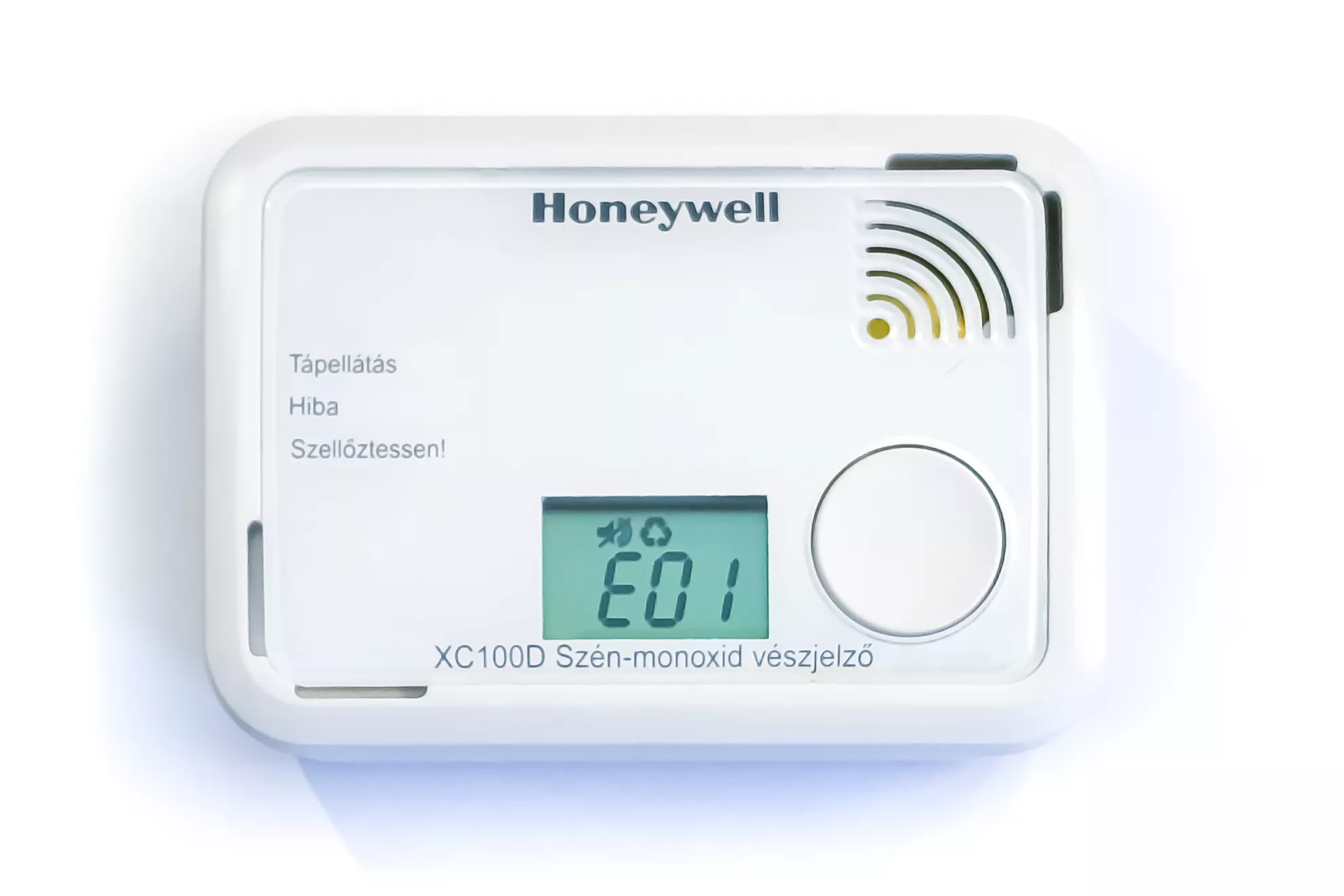
A Honeywell XC100D carbon monoxide alarm that had reached the end of its service life recently came into my possession. At this stage, the unit may still appear to operate normally, but it can no longer be considered fully reliable. It signals this condition with a sharp chirp once every minute, accompanied by a flash of the yellow Fault LED. Pressing the button silences the warning, but only for 24 hours, after which the chirping starts again. Since the alarm’s service life cannot be extended, I decided to take it apart before disposing of it.
The Honeywell XC100D is a long-life, lithium-battery-powered carbon monoxide alarm. The Honeywell X-Series was designed primarily for use in apartments, family homes, holiday homes, caravans, and boats, but it can also be used in locations where a fuel-burning appliance, generator, or other equipment producing combustion gases is in operation. It does not detect smoke, gas leaks, or carbon dioxide; instead, it monitors the concentration of carbon monoxide in the air.
Features of the device
The device is available in three versions. The XC70 is the basic model with a seven-year service life, using three differently coloured LEDs to indicate the unit’s status. The XC100 has a ten-year service life and, in addition to the three LEDs, flashes a large red warning message during an alarm.
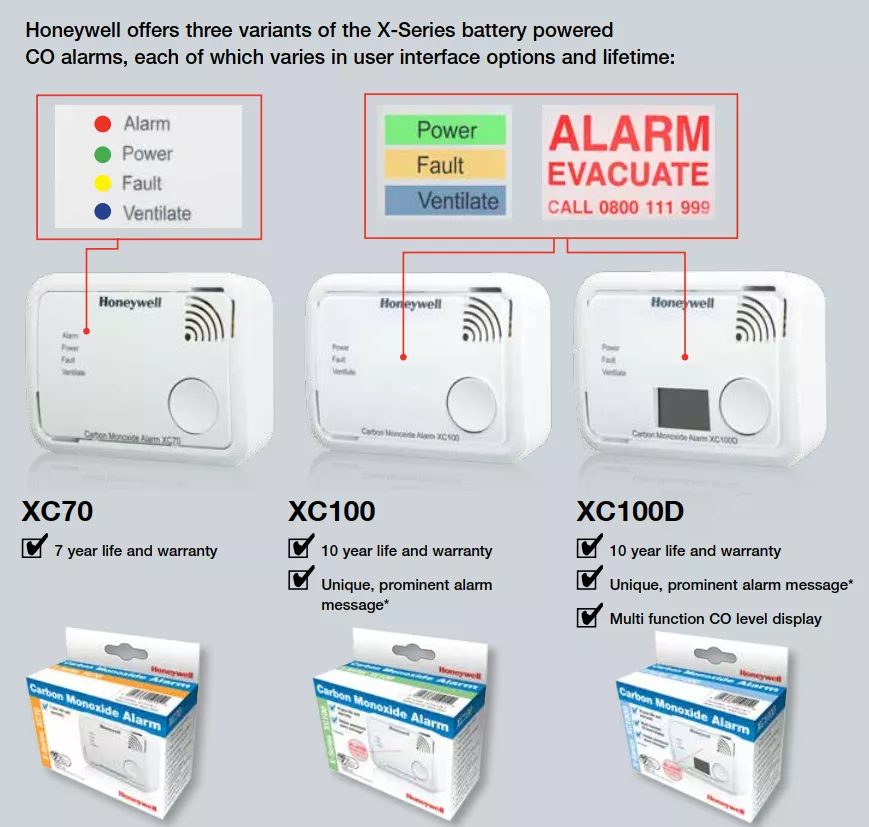
The XC100D is the XC100 version equipped with an LCD. During normal operation, the LCD remains blank, but during an alarm it displays the current CO concentration in ppm, together with hazard warning symbols. The highest previously measured concentration can also be retrieved from the display, while in the low-level monitoring mode the current value is shown once it exceeds 10 ppm.
All three models also contain a very loud sounder rated at more than 90 dB. Each model has a large TEST/HUSH button. All three types can optionally be fitted with an XW100 wireless module, allowing an alarm from one unit to activate the sounders of the other units in the system. This feature is particularly useful in larger, multi-storey residential buildings.
At the heart of the devices is an electrochemical sensor cell, referred to in Honeywell’s documentation as the ECO-SURE X. Carbon monoxide entering the electrochemical cell triggers a chemical reaction that generates an extremely small electric current proportional to the gas concentration. The device’s electronics measure and evaluate this signal.
The XC100D is the XC100 version equipped with a display. During normal operation, the LCD remains blank, but during an alarm it displays the current CO concentration in ppm, together with hazard warning symbols. The highest previously measured concentration can also be retrieved from the display, while in the low-level monitoring mode the current value is shown once it exceeds 10 ppm.
Key specifications of the XC100D
| Feature | Manufacturer’s specification |
|---|---|
| Gas detected | Carbon monoxide, CO |
| Sensing principle | Electrochemical cell, ECO-SURE X |
| Display | LCD, concentration displayed in ppm |
| Power supply | Built-in, sealed 3 V lithium battery |
| Rated service life | 10 years |
| Manufacturer’s warranty | 10 years |
| Dimensions | 100 × 72 × 36 mm |
| Weight | approximately 133–135 g |
| Operating temperature | −10 to +45 °C |
| Permissible humidity | 25–95% relative humidity, non-condensing |
| Ingress protection | IP44 |
| Alarm sound level | at least 90 dB at 1 metre |
| Reduced-volume test | approximately 75 dB |
| Automatic self-test | every 60 minutes |
| Installation | wall-mounted, ceiling-mounted, or free-standing |
| Wireless interconnection | using the optional XW100 module |
The unit is not powered by conventional replaceable batteries. It contains a sealed, long-life, 3 V lithium power source. If the battery becomes depleted, the sensor ages, or another internal fault occurs, the manufacturer therefore specifies replacement of the entire unit rather than repair or battery replacement.
When does it sound the alarm?
Carbon monoxide alarms do not activate as soon as a single, sharply defined concentration is reached. The danger is determined by the combination of concentration and exposure time, so the alarm must sound sooner at higher concentrations.
The full alarm ranges specified in the XC100D manufacturer’s documentation are:
| CO concentration | Permitted time before alarm |
|---|---|
| 50 ppm | 60–90 minutes |
| 100 ppm | 10–40 minutes |
| 300 ppm | no more than 3 minutes |
These broad ranges do not indicate that the device is inaccurate. The standard deliberately prevents the alarm from giving a full warning in response to brief, low-level disturbances, while requiring it to provide a warning before harmful exposure develops. The alarm characteristics of the unit comply with the requirements of EN 50291.
The XC100D also has an optional pre-alarm function. This can provide a blue Ventilate indication and a warning sound when the measured exposure reaches approximately 25 per cent of the full alarm threshold. The function can be enabled by pressing the TEST/HUSH button five times. Its purpose is to make a slowly deteriorating boiler, stove, or other fuel-burning appliance noticeable before a dangerous condition develops.
Indicators and controls
There are four differently coloured status indicators on the front of the unit:
- the green Power light indicates operation;
- the red Alarm light indicates a CO alarm;
- the yellow Fault light indicates a fault or the end of the unit’s service life;
- the blue Ventilate light is associated with the pre-alarm and low-level monitoring modes.
During normal operation, the green light flashes once every minute and the LCD remains blank. When a dangerous CO concentration is detected, the red indicator flashes, the large ALARM – EVACUATE message appears, the sounder activates, and the LCD displays the concentration.
The large button on the front serves both testing and silencing functions. A short press checks the indicator lights, the display, and the sounder. The test initially runs at a reduced volume, but if the button is held down, the unit also sounds at full alarm volume. Under suitable conditions, the CO alarm sound can be silenced for five minutes, while the fault warning can be silenced for 24 hours. The visual hazard indication remains active.
Self-test, memory, and event log
The XC100D electronics perform an automatic self-test every 60 minutes. This does not, however, replace the regular manual test recommended by the manufacturer, during which the operation of the entire user interface can be checked.
If the unit sounded an alarm while the occupants were away, it retains a record of the event. The red indicator continues to flash, and the highest recorded CO concentration can be retrieved on the LCD. The user-accessible alarm memory remains active until the button is pressed, but for no longer than seven days.
The unit also maintains a more detailed internal event log. According to the manufacturer’s documentation, it stores detailed concentration data from the previous week, weekly maximum values over its entire operating life, and the times of alarm events. These data can primarily be read using a device or application intended for professionals.
Housing and mounting
The 100 × 72 × 36 mm housing is slightly smaller than the palm of a hand. The manufacturer used a sealed design to protect the internal electronics from moisture and other environmental effects. The unit is rated IP44: its interior is protected against solid objects larger than one millimetre and against splashing water from several directions, but it is not waterproof.
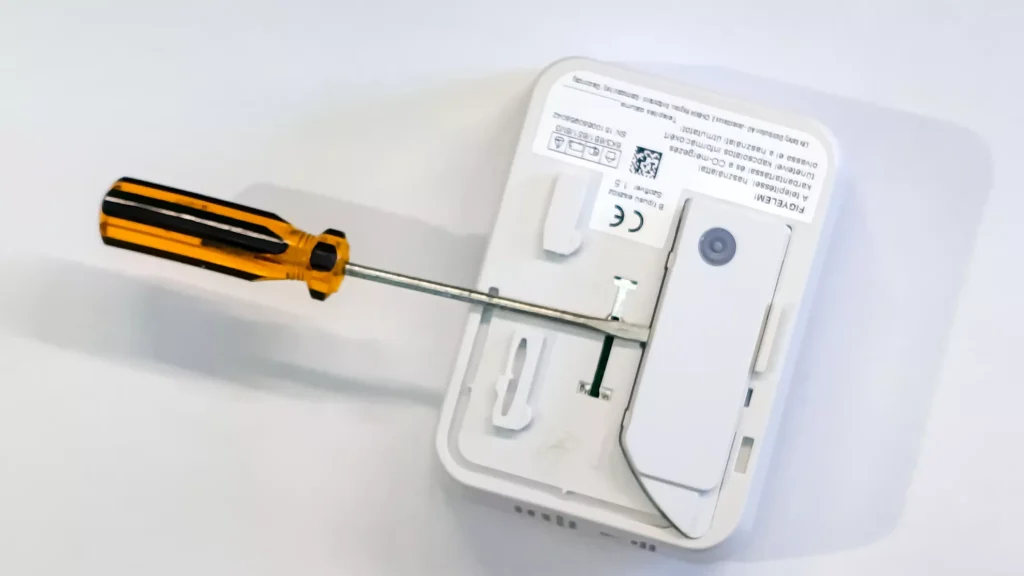
The supplied backplate is more than a mechanical mounting component. When the unit is slid onto the mounting plate, a switch activates the electronics. Removing it switches the unit off, but the attachment is deliberately difficult to release: a catch must be pressed with a screwdriver. This prevents the alarm from being switched off or removed without tools. The mounting plate must also be fitted when the unit is used free-standing; otherwise, it will not switch on.
Standards and certifications
AzThe XC100D was certified by BSI according to the following standards:
- EN 50291-1:2010: carbon monoxide alarms for use in residential buildings;
- EN 50291-2:2010: units suitable for use in caravans, motorhomes, boats, and similar environments.
The documentation also lists CE, BSI Kitemark, RoHS, and REACH compliance. Datasheets for some later product variants also mention Amendment A1:2012 to EN 50291-2.
Disassembly
This unit was not designed to be disassembled without damage. The first step is to remove the backplate. This can be done by inserting a screwdriver into the small opening in the backplate, pressing the locking catch, and then sliding the plate sideways.
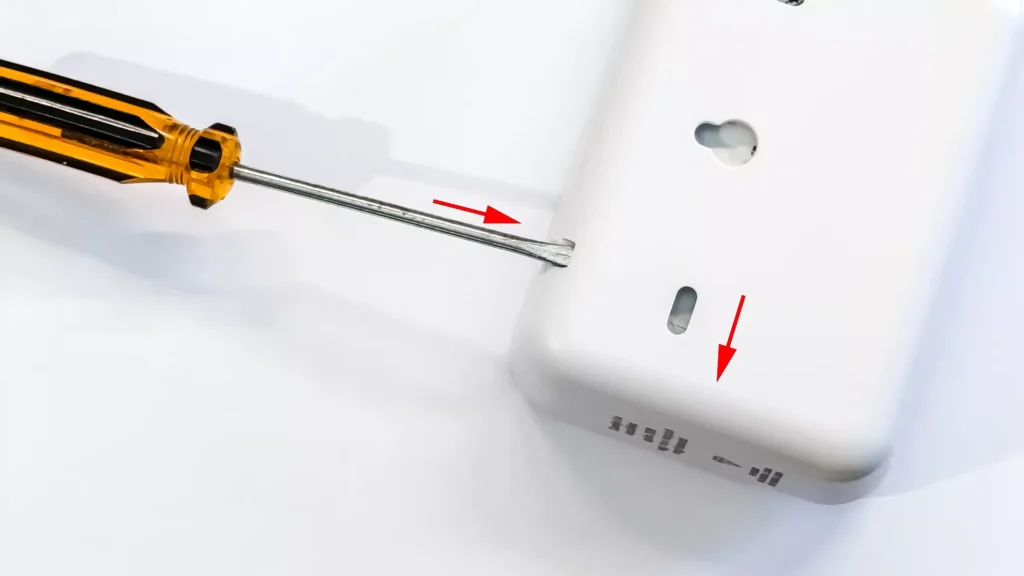
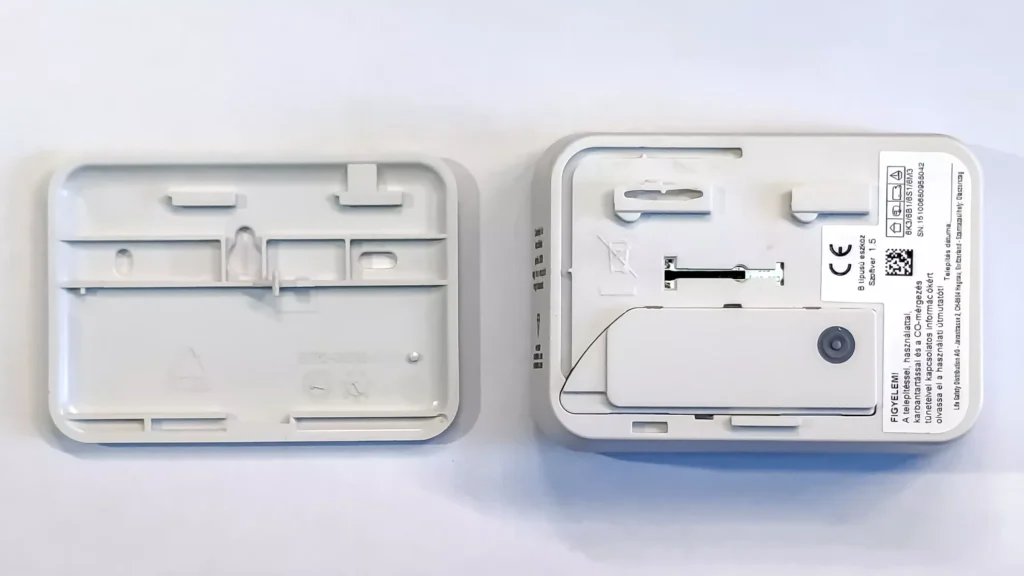
Beyond removing the backplate and the front acrylic panel, the unit cannot be taken apart any further without causing damage. The housing components are not held together by screws, but are snap-fitted and also bonded with silicone rubber adhesive. Any further intervention will damage the device. Before opening the housing, it is important to note that the XC100D is a sealed safety device. Once disassembled, it can no longer be considered a reliable alarm, even if it appears to continue operating.
The unit examined here must therefore be used only for demonstration and technical analysis from this point onwards.
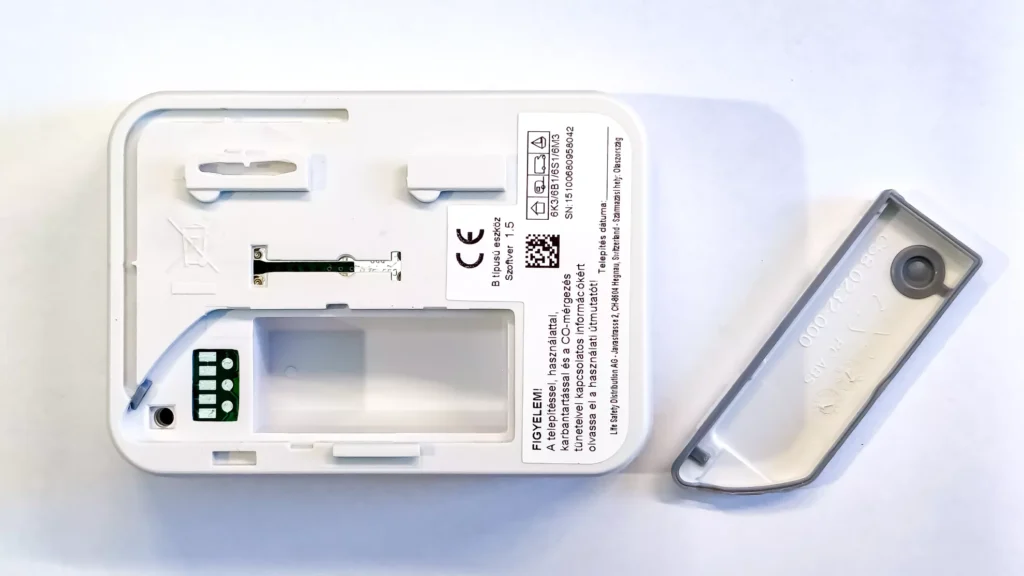
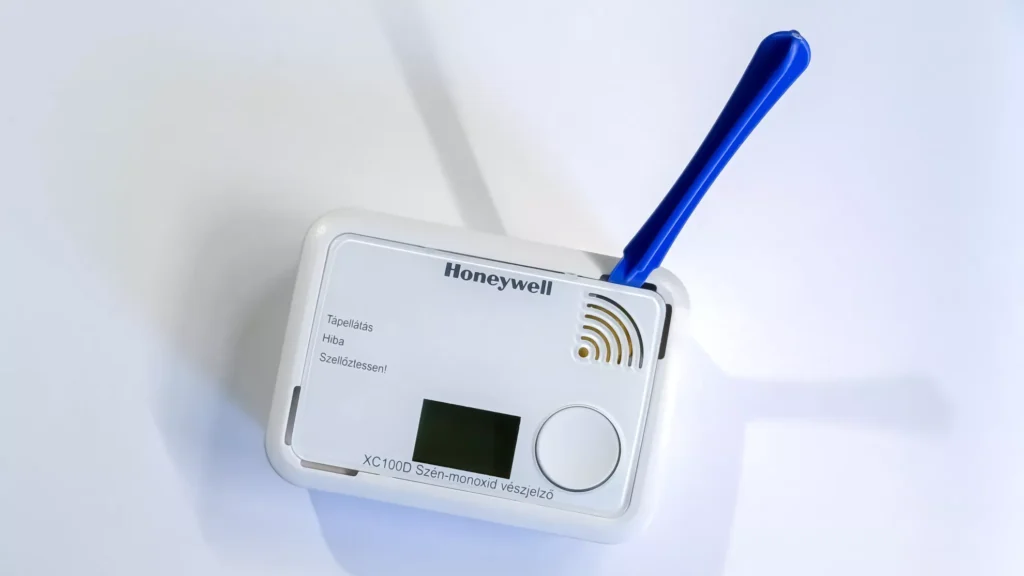
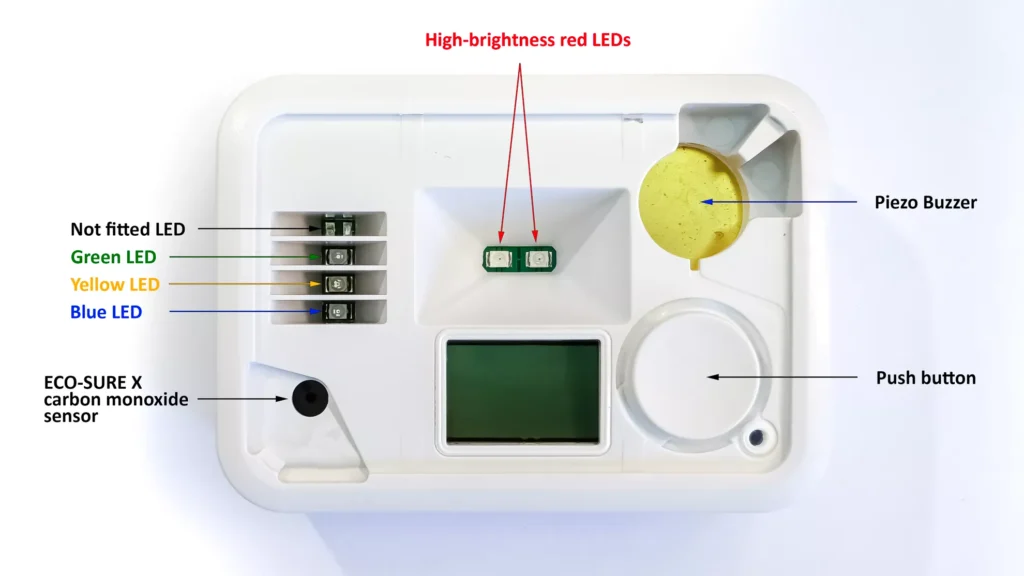
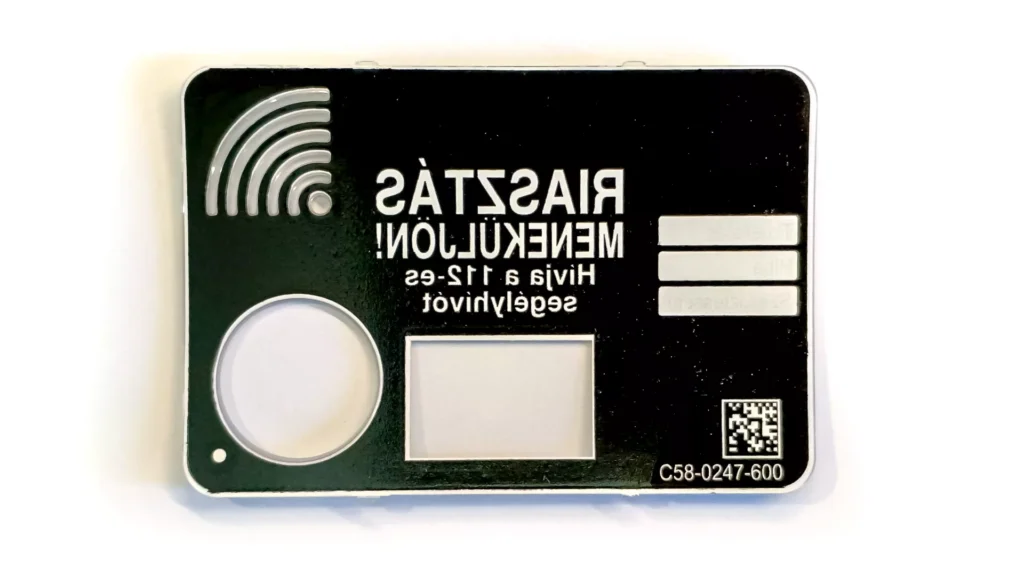
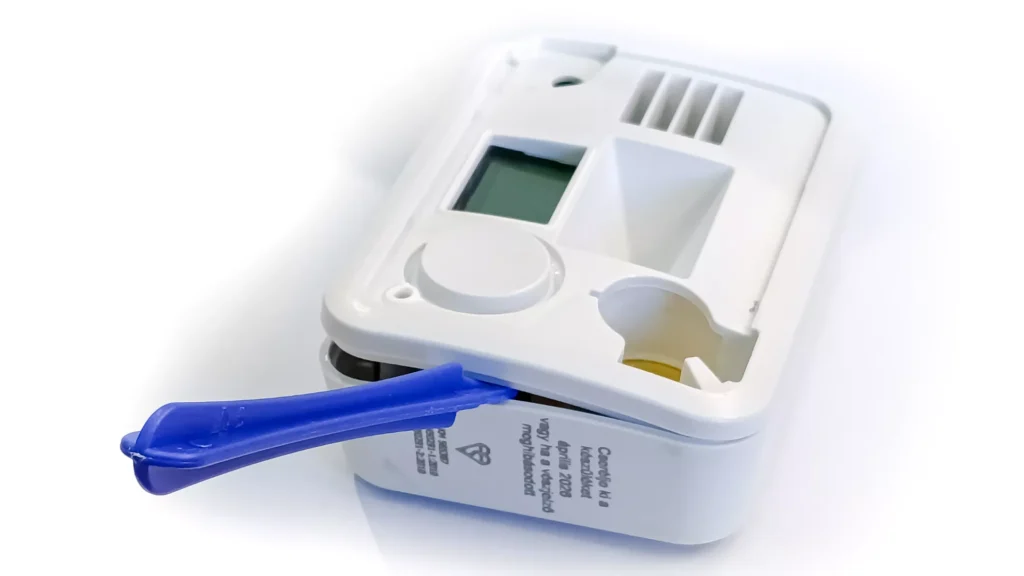
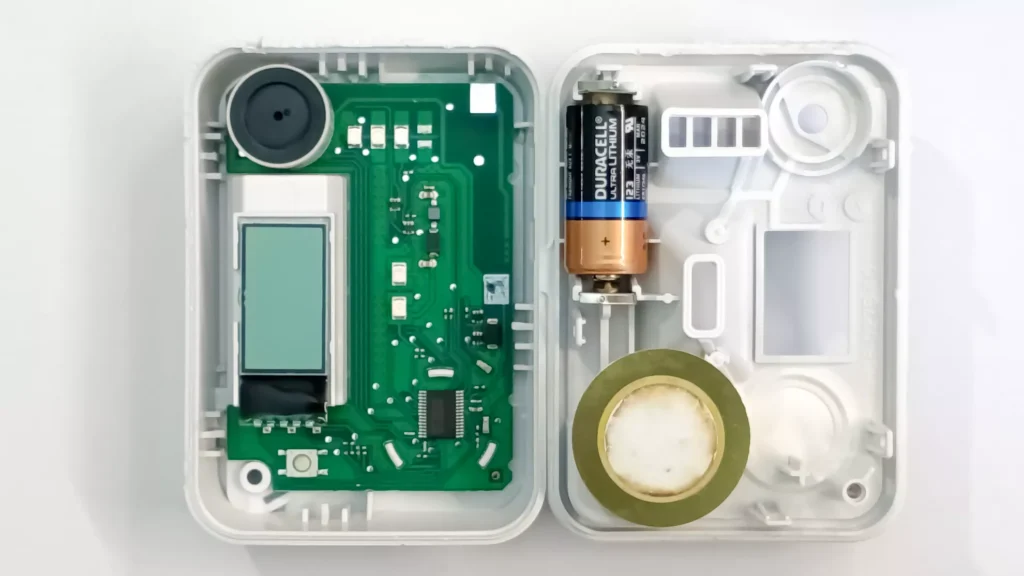
The Honeywell XC100D has a remarkably solid and heavy ABS plastic housing. The manufacturer’s data give two different weight figures: an early Honeywell datasheet specifies 135 grams, while a later distributor’s datasheet gives 133 grams. I measured 135 grams: 93 grams for the completely emptied plastic housing and 42 grams for the electronics themselves, including the battery, sensor, piezoelectric sounder, display, and circuit board.
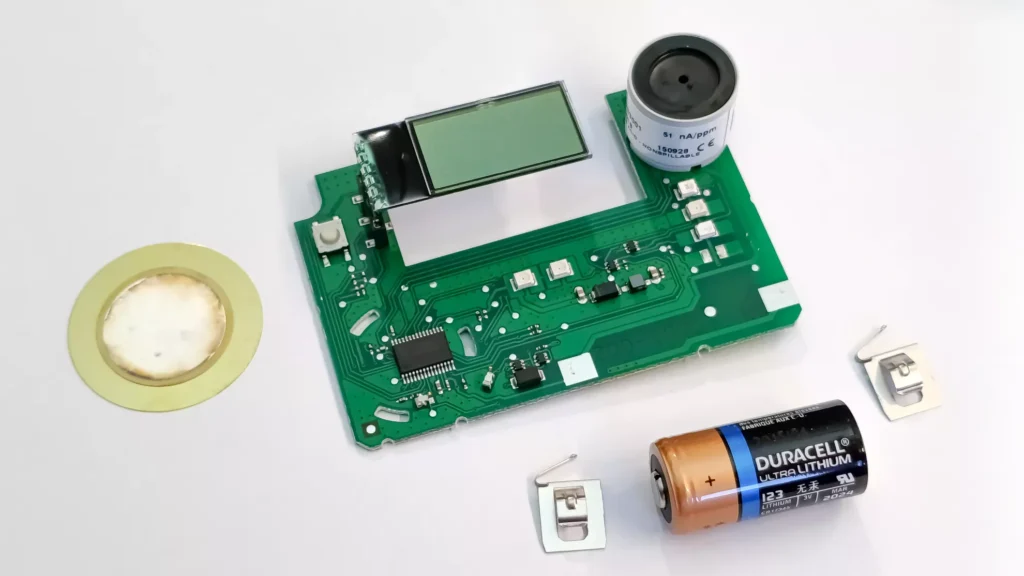
The battery was not yet depleted
The XC100D is powered by a Duracell Ultra Lithium CR17345 lithium manganese dioxide battery. This size is also known as CR123, or as DL123 under Duracell’s designation, and has a nominal voltage of 3 V.
The cell sits in a cradle moulded into the front section of the housing. Two flexible contact plates press against it and, in turn, press against two tinned conductive pads on the printed circuit board. This raises the question of whether it would have been more elegant to gold-plate these contact surfaces. Another common solution would be to connect the battery to the electronics using spot-welded nickel strips soldered into the PCB.
The manufacturer designed the entire alarm as a sealed, maintenance-free unit with a ten-year service life, in which the battery is not intended to be replaced. It could quite reasonably have been permanently connected, yet the design used here resembles that of a unit with a replaceable battery, except that the opening beneath the front acrylic panel that would permit battery replacement has not been cut out.
The battery was marked with a date of March 2024, but the unit did not indicate the end of its service life until the very end of July 2026. This was approximately 28 months later. The marking on the battery should not be interpreted as the operating expiry date of the installed cell. Date markings on lithium batteries of this type normally refer to the period for which the manufacturer guarantees the shelf life of an unused battery under suitable storage conditions.
According to Duracell’s current information, the CR123/CR17345 type has a shelf life of ten years. Strictly speaking, there is therefore no problem, although it would be more elegant if the battery’s guaranteed shelf life were not two years shorter than the intended operating life of the unit.
After removal, the battery’s open-circuit voltage was 3.09 V. An open-circuit measurement alone says little about the condition of a battery, so it was also tested under load using a 51.0-ohm resistor. The terminal voltage then fell only to 3.01 V. The load current was approximately 59 mA and the voltage drop was 80 mV. These values give an estimated instantaneous internal resistance of approximately 1.36 ohms. The measurement shows that, at the time of disassembly, the battery was still able to maintain its nominal voltage under a significant load.
This suggests that the unit’s end-of-life indication was most probably not triggered by battery depletion.
The measurement nevertheless characterises only the battery’s behaviour at that particular moment under a load of approximately 59 mA. A precise assessment would require a longer-duration load test and measurements at several different load currents. Nor does the static test using a 51-ohm resistor necessarily reproduce accurately the brief current peaks produced while the piezoelectric sounder is operating. Even so, the result clearly demonstrates the energy reserve built into the design.
According to the manufacturer’s documentation, replacement of the unit is required because the guaranteed operating life of the electrochemical CO sensor has expired, not because no further energy can be extracted from the built-in power source.
The ECO-SURE X sensor
The CO sensor used in the unit is an ECO-SURE X long-life electrochemical CO sensor. The small plastic cylinder, measuring 20.4 mm in diameter and 16.6 mm in height and weighing 5 g, is held in its socket on the circuit board by its two gold-plated terminals. It can simply be unclipped.
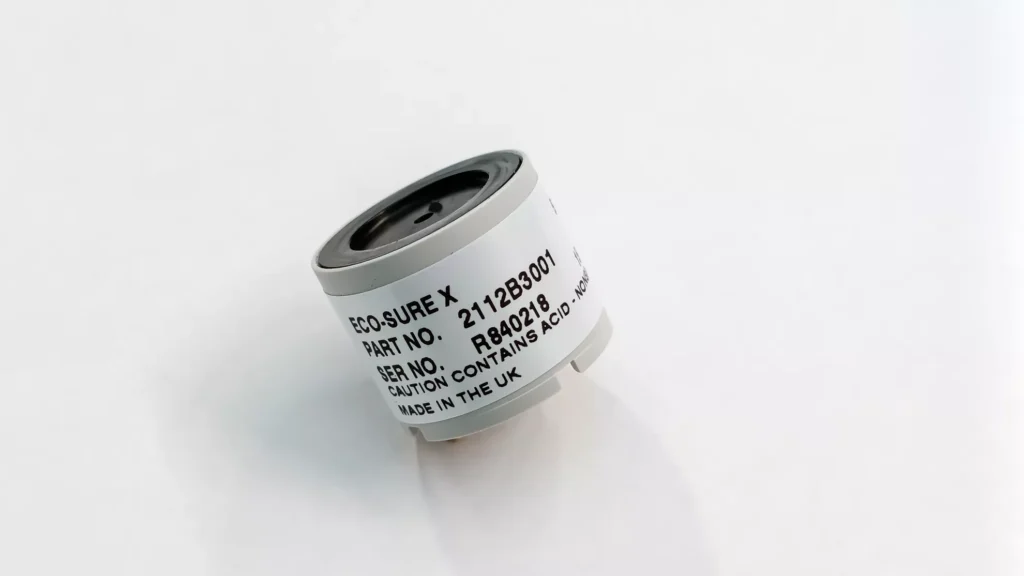

The following markings can be read on the sensor label:
- Part No. 2112B3001: the manufacturer’s exact part number;
- Ser. No. R840218: individual serial number;
- 51 nA/ppm: the factory-determined sensitivity of this particular unit;
- 150928: manufacturing date code: 28 September 2015.
According to the manufacturer’s documentation, the Data Matrix code contains an encrypted 28-character data string. This includes the gas type, serial number, part number, manufacturing date in YYMMDD format, and the individual sensitivity in nA/ppm.
This is particularly interesting in relation to the unit’s end-of-life indication. Approximately 10 years and 10 months elapsed between the manufacture of the cell on 28 September 2015 and the shutdown at the end of July 2026. Under normal operating conditions, the manufacturer specifies an expected operating life of more than 10 years for the cell, measured from its date of manufacture. The unit examined here had therefore genuinely exceeded this limit.
The Sixth Sense marking is an older brand name for the product family. Current official documentation uses the City Technology or Honeywell names. Honeywell acquired the gas-sensing business of First Technology in 2006 and subsequently integrated it into Honeywell Analytics.
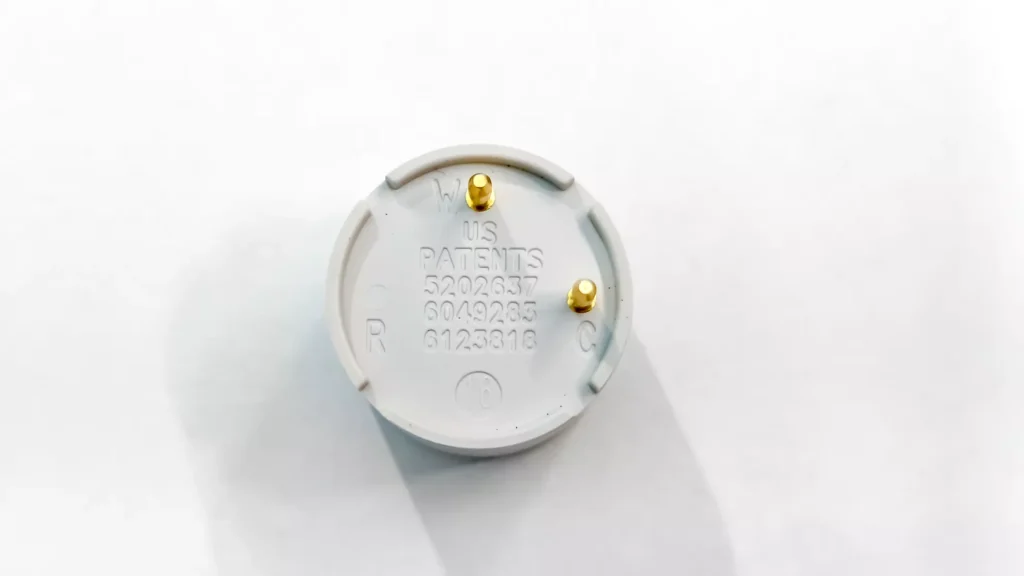
The advantage of the two-electrode design is that it requires simple electronics with extremely low power consumption. Its disadvantage is that, at high concentrations, polarisation of the counter electrode can shift the potential of the working electrode and cause the cell to become non-linear. This is one reason for the nominal measurement range of 500 ppm and the maximum overload specification of 1,000 ppm.
In fact, a tiny fuel cell
The ECO-SURE X does not require heating, and the sensor cell itself needs no external power supply. Honeywell’s documentation describes sensors of this type as micro fuel cells: the carbon monoxide and oxygen in the surrounding air provide the reactants for the electrochemical reaction, and the cell supplies the resulting current.
CO is oxidised at the working electrode:
At the counter electrode, oxygen is reduced:
The electrons released during the oxidation of CO return to the counter electrode through the external circuit. The resulting current is approximately proportional to the concentration of carbon monoxide entering the cell.
What does 51 nA/ppm mean?
The 51 nA/ppm shown on the label is the individual sensitivity of this particular sensor. This means that, under ideal conditions, every additional ppm of carbon monoxide increases the cell’s output current by approximately 51 nanoamps.
| CO concentration | Expected cell current |
|---|---|
| 10 ppm | 0.51 µA |
| 50 ppm | 2.55 µA |
| 100 ppm | 5.10 µA |
| 300 ppm | 15.3 µA |
| 500 ppm | 25.5 µA |
These are extremely small currents. The unit therefore requires a current-to-voltage converter amplifier with low input leakage and low offset. The City Technology design guide uses a 100 kΩ feedback resistor as an example. With this value, the cell examined here would produce a signal of approximately 0.51 V at 100 ppm.
Key specifications of the ECO-SURE X
| Characteristic | Manufacturer’s specification |
|---|---|
| Gas detected | carbon monoxide |
| Operating principle | two-electrode electrochemical cell |
| Measurement range | 4–500 ppm CO |
| Maximum overload | 1,000 ppm CO |
| Nominal sensitivity | 50 ± 10 nA/ppm |
| Sensitivity of the unit examined | 51 nA/ppm |
| Response time, T90 | less than 30 seconds |
| Clean-air zero offset | −2 to +4 ppm CO equivalent |
| Repeatability | better than ±5% |
| Linearity | within ±5% |
| External bias voltage | not required |
| Continuous operating temperature | −10 to +50 °C |
| Continuous operating humidity | 15–90% RH, non-condensing |
| Expected operating life | more than 10 years from the date of manufacture |
| Long-term sensitivity drift | less than 5% per year |
What can be seen inside the opened cell?
The sensor is completely sealed and cannot be unclipped; it can only be sawn open. Even then, there is not much to see because the bottom of the cell is potted. Gas enters the cell through a tiny opening in the outer surface of the top cap. This opening and the diffusion layers beneath it regulate how much gas reaches the working electrode per unit of time.
The electrodes are porous PTFE discs with a catalytic coating, with an electrolyte-soaked glass-fibre insert between them. The patent description mentions a platinum-black catalyst, while the current safety datasheet refers only to “catalytic electrodes of proprietary composition”. The dark discs visible in the photograph can therefore reasonably be identified as catalyst-coated electrodes, but the exact catalyst composition of the ECO-SURE X cannot be determined with certainty from publicly available sources.
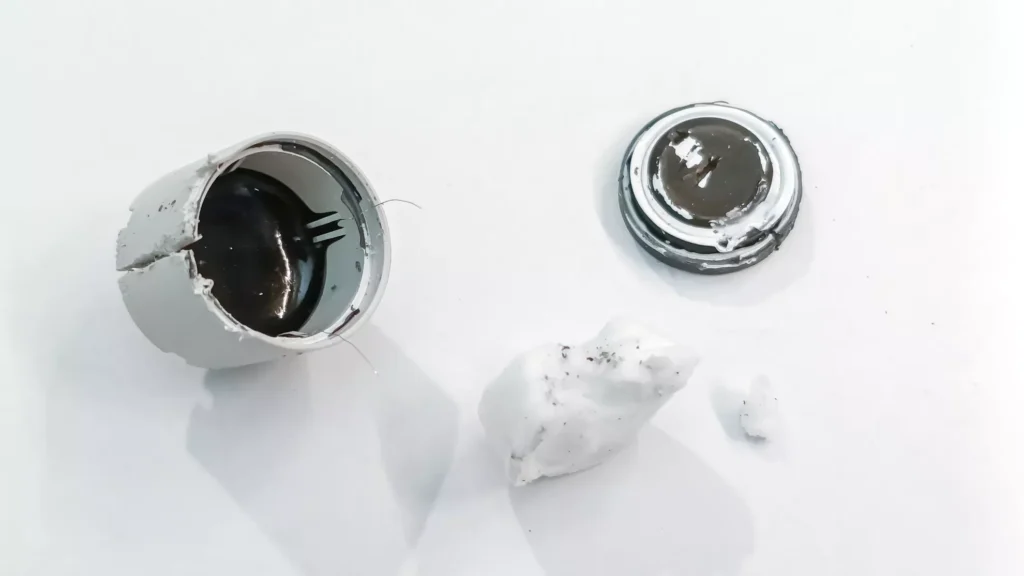
Important safety note: According to the safety datasheet, the electrolyte used in the ECO-SURE family contains sulphuric acid, while the composition of the filter and catalytic electrodes is partly proprietary. An intact sensor presents no chemical hazard during normal use, but once cut open it can no longer be regarded as a “nonspillable” unit. The electrolyte may cause skin and eye damage.
What causes it to age?
In principle, the CO reaction does not directly consume the electrodes: the cell material acts as a catalyst. Ageing nevertheless occurs. Over time, the activity of the electrodes may change, the electrolyte may dry out or become redistributed, the diffusion barrier and filter may deteriorate, and the cell’s baseline and sensitivity may change. The manufacturer specifically warns that sensitivity may eventually fall below the lower specification limit.
Surprisingly, the three US patent numbers moulded into the housing—US 5,202,637; US 6,049,283; and US 6,123,818—do not primarily concern the chemistry of CO detection, but the electronic self-testing of the electrochemical cell. One method applies a small DC test voltage and monitors the cell’s response current. Another uses the cell’s own electrical noise to detect loss of electrolyte or breaks in internal wires.
The third measures the cell’s large electrochemical capacitance using a short current pulse and uses the result to determine whether the sensor is present and operational. Such methods allow the unit to detect certain faults without using CO test gas, including a broken internal wire or substantial loss of electrolyte. It is not possible to determine which particular method the XC100D firmware uses, or in precisely what form.
The electrical self-test does not replace a sensitivity test using actual gas. A cell almost eleven years old may still pass an electrical test even if its sensitivity has deviated considerably from its factory value. This is why the entire alarm must be replaced when its service life expires; simply continuing to use the battery is not sufficient.
It does not respond exclusively to CO
Electrochemical sensors are generally selective, but not perfectly so. The factory cross-sensitivity data for the ECO-SURE X include several noteworthy values:
| Gas introduced | Test concentration | Indicated CO equivalent |
|---|---|---|
| hydrogen | 100 ppm | approximately 20 ppm |
| nitric oxide | 50 ppm | approximately 8 ppm |
| ethanol | 2,000 ppm | approximately 5 ppm |
| acetylene | 40 ppm | approximately 80 ppm |
| carbon dioxide | 5,000 ppm | 0 ppm |
| ammonia | 100 ppm | 0 ppm |
| acetone | 1,000 ppm | 0 ppm |
The strong response to acetylene is particularly interesting: in a welding workshop, for example, a relatively low acetylene concentration could cause a false CO indication. The approximately 20 per cent cross-sensitivity to hydrogen may also be significant in locations such as battery-charging rooms. The manufacturer stresses that these measurements are indicative, were performed on a small number of sensors, and that actual values may vary between production batches.
The electronics
The XC100D electronics are clearly laid out in functionally separated sections. The unit is not simply a “sensor and beeper”, but a small, software-controlled measuring system: an analogue circuit processes the nanoamp-level sensor signal, while a microcontroller evaluates it over time, logs it, displays it, and controls the visual and audible warnings when necessary.
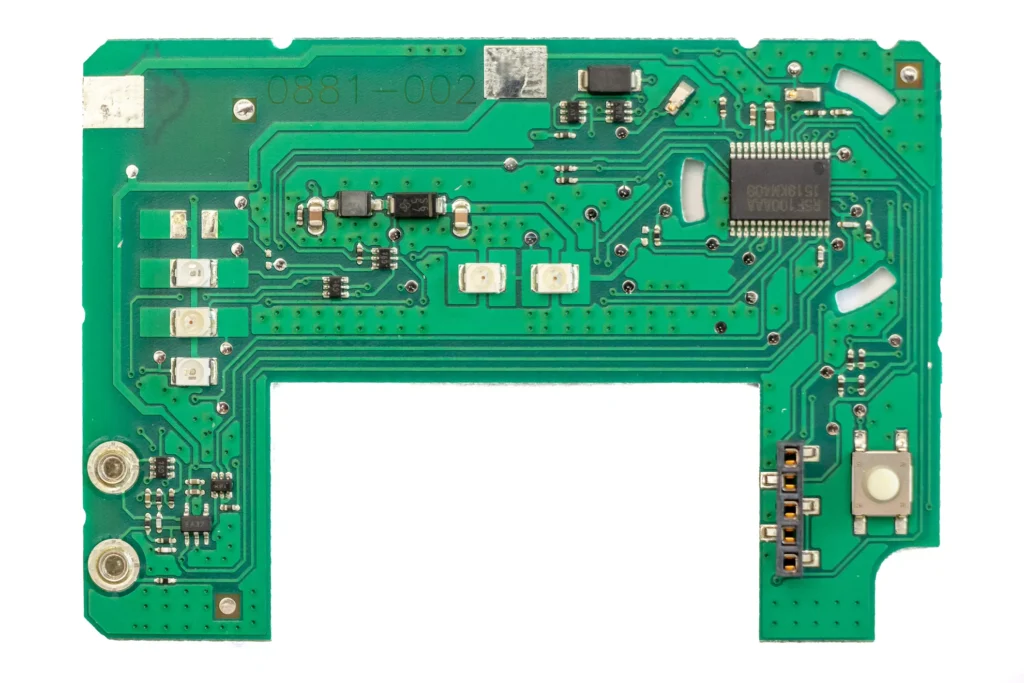
1. The main controller: Renesas R5F100AA
The marking on the largest integrated circuit in the photograph is R5F100AA. This is a 16-bit, low-power microcontroller belonging to the Renesas RL78/G13 family. The R5F100AA is the 30-pin version of the family, with 16 kB of program memory, 4 kB of data flash, and 2 kB of RAM. Its operating voltage range is 1.6–5.5 V, allowing it to operate directly from the 3 V lithium battery.
It includes an A/D converter, timers, a watchdog, a programmable voltage detector, serial interfaces, and a dedicated sound-generator output.
The microcontroller presumably performs all of the following tasks:
- digitising the CO sensor signal;
- calculating the concentration;
- running the time–concentration alarm algorithm;
- controlling the LCD and LEDs;
- generating the audible warning signals;
- monitoring the battery voltage and sensor condition;
- logging alarm and fault events;
- counting the ten-year service life;
- controlling the optional wireless module.
No separate EEPROM or other non-volatile memory is visible on the board. It is therefore highly likely that the event log, calibration constants, operating time, and other persistent data are stored in the microcontroller’s 4 kB internal data flash.
No conventional quartz crystal can be identified next to the processor. The RL78/G13 has internal high- and low-frequency oscillators. Although these are not as accurate as a crystal oscillator, they are adequate for the purpose. An external clock source is not necessarily required for service-life counting and normal operation.
2. The sensor’s analogue signal-processing circuit
The two large circular contacts visible in the lower-left corner of the PCB are connected to the W and C terminals of the ECO-SURE X sensor. Immediately beside them are: one eight-pin integrated circuit; two smaller six-pin semiconductor devices; several resistors and capacitors; a number of diodes or transistors.
This forms a clearly separated island containing the analogue measurement section of the board. The ECO-SURE X does not produce a voltage, but a current proportional to the CO concentration. According to Honeywell, the output current of an electrochemical cell is proportional to the concentration of the target gas.
It would not be advisable to feed this signal directly into the microcontroller’s A/D input. The eight-pin device is therefore most likely a low-power dual operational amplifier. One section may operate as a transimpedance amplifier, converting the sensor current into a measurable voltage, while the other may provide filtering, reference-voltage generation, or electrical self-testing. The exact device cannot be identified from the EA37 marking visible on the IC. Such short SMD codes are often not unique and may also include manufacturing or batch codes.
The nearby six-pin components could be analogue switches, dual transistors or MOSFETs, low-power comparators, or switching elements used to apply brief electrical excitation to the sensor. On the basis of the patents listed on the underside of the ECO-SURE X, the condition of the sensor can be tested using a small test voltage, its transient response, or an analysis of its own electrical noise.
The circuit board does not reveal exactly which method the XC100D uses. However, the presence of several switching components beside the sensor suggests that the circuit may do more than continuously measure the CO signal: it may periodically alter the load on the cell, apply a pulse, and then evaluate its response.
3. Digital, software-based calibration
No trimmer potentiometer or other mechanically adjustable component is visible on the board. The calibration is therefore almost certainly digital. During production, the individual sensitivity value printed on the sensor label—51 nA/ppm in this example—could have been written into the microcontroller’s data memory. The firmware could then use this value to convert the measured amplifier voltage into a concentration in ppm.
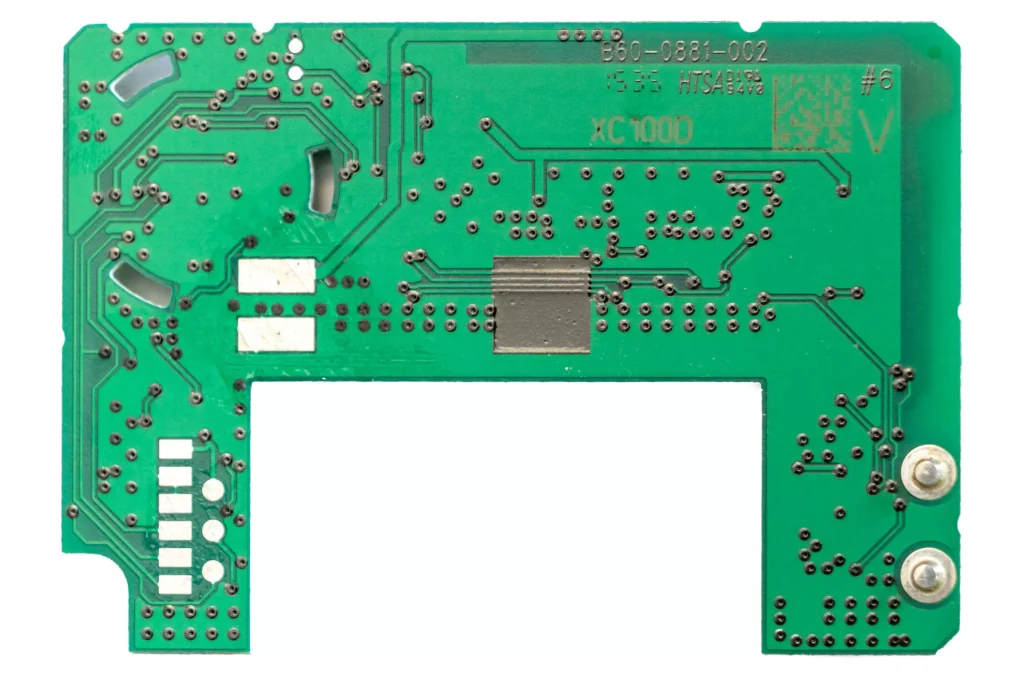
The six rectangular and three circular contact pads visible in the lower-left section of the rear of the PCB form the connector for the optional XW100 module and are probably also factory test points. RL78 microcontrollers have a single-wire TOOL0 programming and debugging interface, so relatively few contacts are required. A spring-loaded, bed-of-nails test fixture could have made contact with these pads.
This interface may have been used to program the microcontroller; write the serial number and calibration data; check the battery voltage and current consumption; perform factory tests of the LEDs, display, and sounder; and inject a known current simulating a CO signal.
Power supply
The battery-holder contacts connect to the two large contact pads near the upper-left edge of the PCB. When the backplate is fitted, the plate of the rear switch connects two large rectangular contacts near the centre of the back of the board. This switch directly interrupts the battery circuit, meaning that the unit receives no power and is completely switched off when the backplate is not fitted.
With a ten-year operating life, every microamp of current consumption matters. During normal operation, the unit presumably remains in sleep mode almost all the time. It wakes only periodically to measure the sensor output, check the battery voltage, update the time counters, and run diagnostics. The RL78/G13 family was specifically designed for low-power, battery-operated applications of this kind. The manufacturer specifies a sleep-mode current of approximately 0.57 µA for the family with the real-time clock and voltage detector operating.
Sounder driver
The high sound level is produced by a separate piezoelectric disc mounted in the housing. The spring contacts in the upper-right section of the board and the driver semiconductors nearby may belong to this circuit. The piezoelectric disc is not driven directly by a single microcontroller output, but by a multi-transistor push-pull stage.
The sounder may also be usable for data transmission. The X-Series Alarm Scan application was able to transfer alarm and fault data stored in the unit to a smartphone. According to Honeywell’s information, data transmission was initiated by pressing the button three times, without any separate radio hardware.
According to a related Honeywell patent, data of this type can be transmitted through the unit’s sounder to the phone’s microphone using an acoustic signal at approximately 18–20 kHz, which is barely audible or completely inaudible to humans. I was unable to determine whether the XC100D version manufactured in 2015 already supported the Alarm Scan function. By the time I discovered that it might have this capability, I had already dismantled the unit.
Conclusion
The XC100D electronics are therefore economical, but not primitive. Long battery life is achieved through sleep modes and periodic measurements, while reliability is maintained through software diagnostics, voltage monitoring, sensor self-testing, and a predetermined service-life limit. The 3.09 V battery in the dismantled unit was still serviceable; the device was retired because the guaranteed operating life of its most safety-critical component, the electrochemical sensor, had expired.